

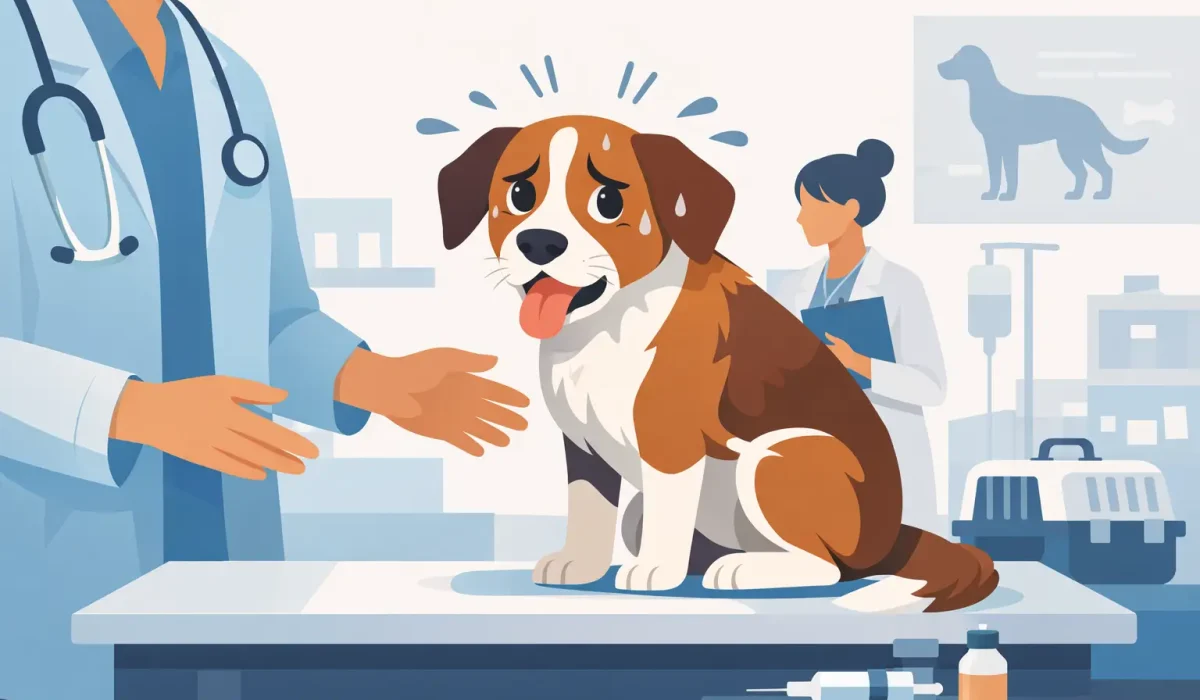
Your dog trembles as soon as he sees his leash, refuses to enter the waiting room or hassle before even leaving the house? A dog stressed in the veterinarian is not a whim. It is a frequent, sometimes intense, reaction that can complicate the examination, distort certain parameters and make this moment painful for him as for you.
This stress often has a very simple logic. The dog anticipates an experiment that it combines with unusual smells, manipulation, pain or separation of its markers. Some animals stay tense for a few minutes and then relax. Others experience consultation as a real test. Age, temperament, past experiences and health status play a lot.
Why a dog can be stressed in a veterinarian
The journey is sometimes the first trigger. Many dogs don't support the car, especially if it is only associated with care appointments. The malaise then begins even before arrival. Once there, the smells of other animals, noises, waiting and novelty further increase the tension.
There is also emotional memory. A dog who has already experienced an uncomfortable examination, pain or immobilization can quickly recognize the situation. It does not analyze the context like us. It connects very concrete details between them: transport box, parking, door, examination table, manipulations.
Stress also depends on the dog's profile. Discovery-phase puppies, elderly dogs, those who hear or see less well, or painful animals may be more sensitive. A dog osteoarthritis, for example, may fear displacement, jumping into the car or certain postures imposed during the examination.
Signs to be detected before the situation worsens
Not all dogs show their stress the same way. In some, it is very visible: tremors, panting, moaning, low tail, refusal to move forward. In others, it is more discreet. They become frozen, look away, lick each other's babines, blush repeatedly or seek to hide behind their human.
Sometimes stress turns into agitation. The dog shoots, barks, jumps, doesn't fit. It's not bad will. It's a way to manage an emotional overflow. Conversely, a very still dog is not necessarily quiet. It can be inhibited, therefore in great discomfort.
Identifying these early signals makes it possible to adapt the way to accompany it. The longer we wait, the higher the tension and the more difficult the examination may be. This is particularly true if the dog needs regular follow-up, vaccines, Health Check or age-related surveillance.
What you can do at home before the appointment
Preparation begins well before consultation. A dog stressed in the veterinarian can better support this moment when the steps are made predictable and softer. The first useful reflex is to avoid any precipitation. If you are tense, in a hurry or worried, your dog perceives it immediately.
Allow a quiet time before departure. A quiet exit can help some dogs relax a little tension, provided it stays short and pleasant. For others, especially if they are old or tired, it is best to keep a simple and relaxing routine.
It is also useful to get the dog used to being handled outside any medical context. Watching the ears, touching the legs, gently lifting the babines or staying a few seconds on a non-slip mat can help live the exam with less surprise. This does not replace consultation, but it makes certain actions more familiar.
The car deserves special attention. If it is only associated with unpleasant events, anxiety starts very early. When possible, a few short journeys without care issues can change this association. The goal is not to force, but to make movement less emotionally charged.
D-Day, the details really matter
The departure must remain sober. Talking a lot, repeating that everything will be fine or multiplying encouragement can sometimes reinforce the idea that something unusual is happening. A calm, simple and consistent attitude is often more reassuring.
During the journey, limit unnecessary stimulation. A stable installation, a temperate passenger compartment and a flexible driving pace already help a lot. When you arrive, if your dog is not able to wait, it may be better to minimize the time spent in a restless environment.
Your presence counts, but it must be adjusted to your dog. Some seek contact and relax when their human remains close to them. Others need a little space. The essential is to observe rather than impose. A gentle gesture at the right time soothes more than continuous solicitation.
When home consultation really changes things
For some dogs, the problem is not just from the examination. It comes from everything you have to go through to get there. Get out, get in the car, wait, meet other animals, enter an unknown place, be handled on a cold table. If many of these steps trigger stress, home care can transform the experience.
In its usual environment, the dog keeps its sensory markers. He knows the smells, the sounds, the surfaces, the people present. This does not remove any apprehension, because an examination remains an examination, but it removes a significant part of the emotional burden. In anxious, elderly, painful or regularly monitored dogs, this difference is often clear.
It is also a more comfortable setting to observe certain behaviors. At home, the veterinarian sees the animal in his/her daily life, with his/her gait, posture, way of moving or resting. For a sensitive or suffering dog, this softer approach can make care more serene and more accurate. In the area of Cannes and neighbouring municipalities, this type of accompaniment very concretely meets the needs of families who want to avoid unnecessary stress to their companion.
What not to do with a stressed dog in the veterinarian
The first mistake is to scold him because he's scared. Even if his behavior complicates the appointment, fear is not a refusal to obey. Junk an anxious dog adds a layer of incomprehension and may worsen the next consultation.
It is also best to avoid forcing him too early, for example by firing him abruptly, lifting him up without preparation or trying to go fast at all costs. Of course, some medical situations require rapid action. But as soon as the context allows, a few seconds given to the dog to observe, feel and understand can change the course of the examination.
Another important point: do not systematically minimize signs of stress. A dog that "has always been like this" still deserves to adapt the approach. Repeated stress is not trivial. It can make future visits more difficult and alter the overall comfort of the animal.
Should we worry if the stress is very intense?
It depends on its frequency, intensity and context. Moderate, punctual stress can be managed with better preparation and a more suitable setting. On the other hand, if your dog panics from the beginning of the appointment, refuses any manipulation or takes a long time to go down after the consultation, it is useful to speak frankly with the veterinarian.
The goal is not only to pass an exam that day. It is to build, as far as possible, a more sustainable care experience. This is particularly important for dogs who will need regular follow-up, whether prevention, age-related check-ups or monitoring of chronic disease.
Make care possible without exhausting your dog
An anxious dog needs to be thought of as a whole. The quality of care is not limited to the medical procedure. It also depends on the way in which the animal is brought, the reading of its signals, the time it is given and the framework in which it is taken care of.
At PointVet, this attention is part of Dr. Point Elsa's approach to home care, with a simple will: to preserve the emotional comfort of the animal as much as possible without abandoning the medical requirement. For many families, it's a softer way to track their dog, especially when it ages, becomes painful or strongly dreads movement.
If your dog fears every visit, it is not a fatality or a detail. By adapting the context, by better observing its signals and choosing a more serene support when it is relevant, one can often turn a dreaded moment into a care finally bearable.

